Technical tutorial / Company Building
Build a Founder Experiment Journal from Zero
Document the starting state, decisions, tests and outcomes so your company-building story teaches something reproducible.
By Aaron Peden · Published · Updated October 27, 2026
Build this: A dated experiment entry with evidence, unknowns, a next decision and a reader exercise.
Before you start: A real business or project, permission to share its information and a willingness to separate plans from results.
A founder journal can become either a highlight reel or a useful operating record. The useful version explains what was known, what was uncertain, what was tried and what happened. Readers can then borrow the method without assuming their market will produce the same outcome.
The WellStaq journal begins with a dated starting-point note. It describes the public offer and the questions that still need proving. “From zero” refers to the beginning of the documented journey, not a verified claim that the company has zero customers, revenue or costs. Keep the same precision in your own story.
1. Record the starting state without polishing it into a result
Write what exists today: public offer, prototype, permissioned research, paying customers or a delivery process. Give each item an evidence source and date. Separate a published page from demand, an early-access signup from a sale and a plan from completed work.
Do not fill missing information with a confident narrative. “Revenue not reported” is different from “revenue is zero.” If a number cannot be shared, state that limit without implying a substitute result. The starting record is useful because later entries can compare against it honestly.
2. Choose the next constraint
List the uncertainties blocking the next decision, then choose one. For a new offer, the question may be whether a specific buyer has a costly recurring problem. For an operating company, it may be whether fulfillment can maintain quality at higher volume. Do not assume traffic is always the constraint.
Write why the chosen question matters now and what evidence could change your mind. This prevents the journal from turning every new tool purchase into progress. The reader should be able to understand the decision even if they do not know the company or its industry.
3. Design a bounded test
Specify the buyer or system, action, owner, time and cost limits, accepted outcome and review date. Use a commitment or operational result appropriate to the question. If the test is only planned, label it planned. Do not write future steps in the past tense to make the entry feel more complete.
Record prerequisites and protected decisions separately. A worksheet does not authorize spending, legal claims, medical services or public launch. For a regulated or partner-dependent product, confirm the relevant scope and availability before describing an offering as live. The journal should teach the process without overstating readiness.
4. Capture evidence while doing the work
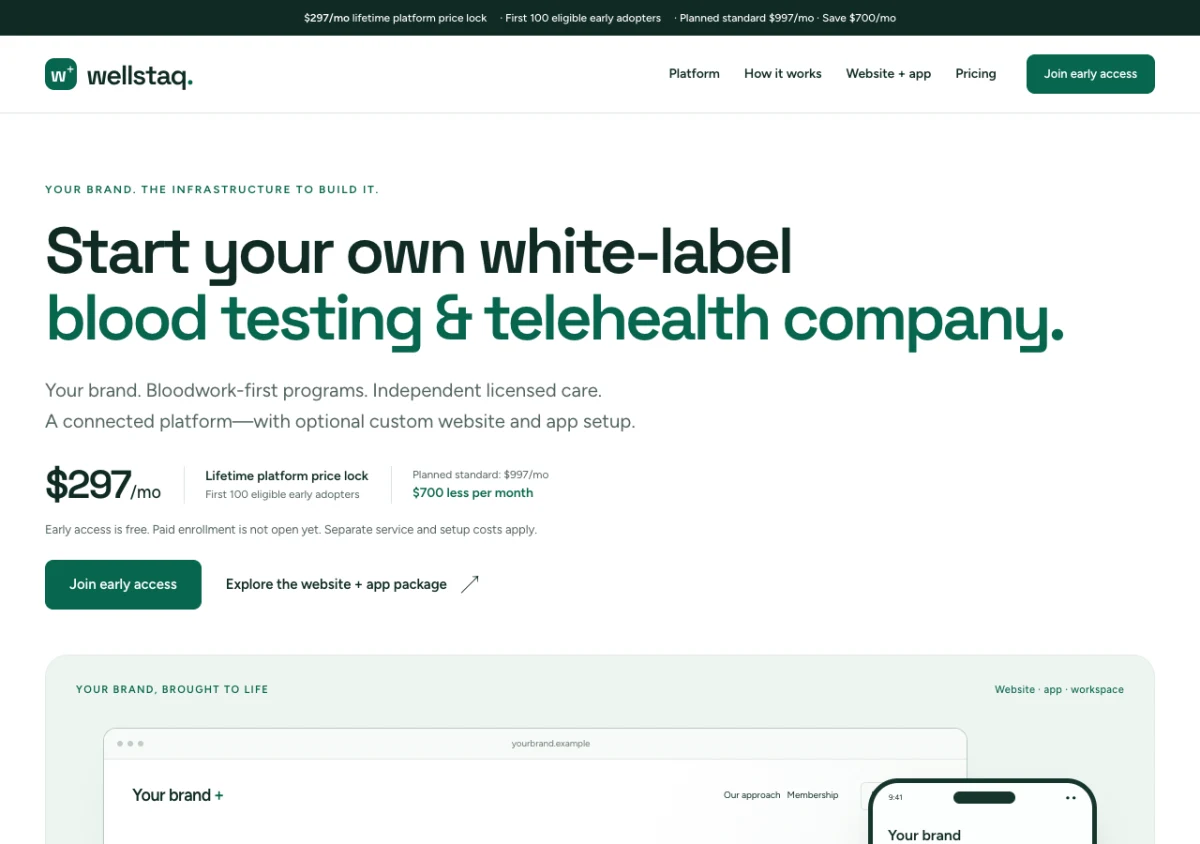
Save the relevant page version, test output or anonymized observation as it happens. Use actual screenshots with source dates and captions explaining what they establish. The WellStaq starting-offer image is a dated public-page snapshot, not proof of paid enrollment or a functioning clinical product interface.
Keep customer information, credentials and private strategy out of public evidence. Use aggregate or permissioned examples when appropriate. A redacted record should still preserve enough context to support the claim; if it cannot, explain the limit rather than asking readers to trust an unseen result.
Worked example — illustrative or dated as stated
Dated example: the October 26 WellStaq entry records an open early-access invitation and unreported customer/revenue results. It proposes offer-validation work; it does not claim interviews were completed. A future entry should report the actual work and evidence before drawing a growth conclusion. Consult the current company site for changing availability and terms.
5. Report outcomes and uncertainty
At review time, compare the actual evidence with the original rule. Include the denominator, period and costs for any quantitative result. If the test did not run, say so and explain the operational consequence. If it ran but was inconclusive, report that instead of changing the target after the fact.
Distinguish observed association from a proven cause. A revenue increase after a page redesign could also reflect seasonality, a new channel or a pricing change. State what the test design can support. Useful vulnerability is a specific honest account of uncertainty and response, not an invented struggle or exaggerated turning point.
6. Extract a method the reader can use
End with the decision you made and one exercise someone can apply to their own business. For example: write the current state, mark assumptions, choose the next constraint and define a bounded test. Link the technical lesson needed to carry it out.
Maintain a chronological index so later results can be traced to earlier plans. Update corrections visibly and preserve the original context where practical. A trustworthy journey helps readers understand the work between milestones, including the decisions that did not produce a dramatic success story.
YOUR IMPLEMENTATION WORKSHEET
Build your working document.
Enter planning notes without customer identities or secret values. Your answers stay in this browser and are not saved. Download the completed brief before leaving.
No information is submitted to a server.
Completion checklist
0 / 8 checkedCheck only what you have verified. Download before leaving; this page does not save your progress.
Sources and scope
Primary-source guidance checked October 27, 2026. Interfaces and policies can change; consult the linked current source. Practice screenshots and modeled examples are labeled and are not client campaign results.