Technical tutorial / Paid Advertising
Plan a Google Search Test You Can Afford to Learn From
Build a campaign brief, estimate acquisition economics and set practical spending and review controls before launch.
By Aaron Peden · Published · Updated October 27, 2026
Build this: A launch-readiness brief with intent, landing page, verified conversion and an explicit budget review.
Before you start: An offer you can fulfill, a public working landing page and permission to spend from the account owner.
The first job of a small paid-search test is to answer a bounded question without losing control of cost. Buying clicks before checking the offer, landing page and conversion path can produce an expensive dataset that tells you very little. Start outside the ad account with a brief you can review end to end.
This tutorial prepares the test. It does not launch a campaign or recommend a budget for your business. A seven-day plan is not a Google-enforced total campaign cap, and results from a small sample may remain inconclusive. Verify current controls and account settings before committing money.
1. Choose one intent and one offer
Write the problem the searcher is trying to solve now. Separate research queries from service-selection or purchase queries. Start with a coherent theme rather than mixing several products and locations into one ad group. Record why the query should lead to this offer and what would make a click irrelevant.
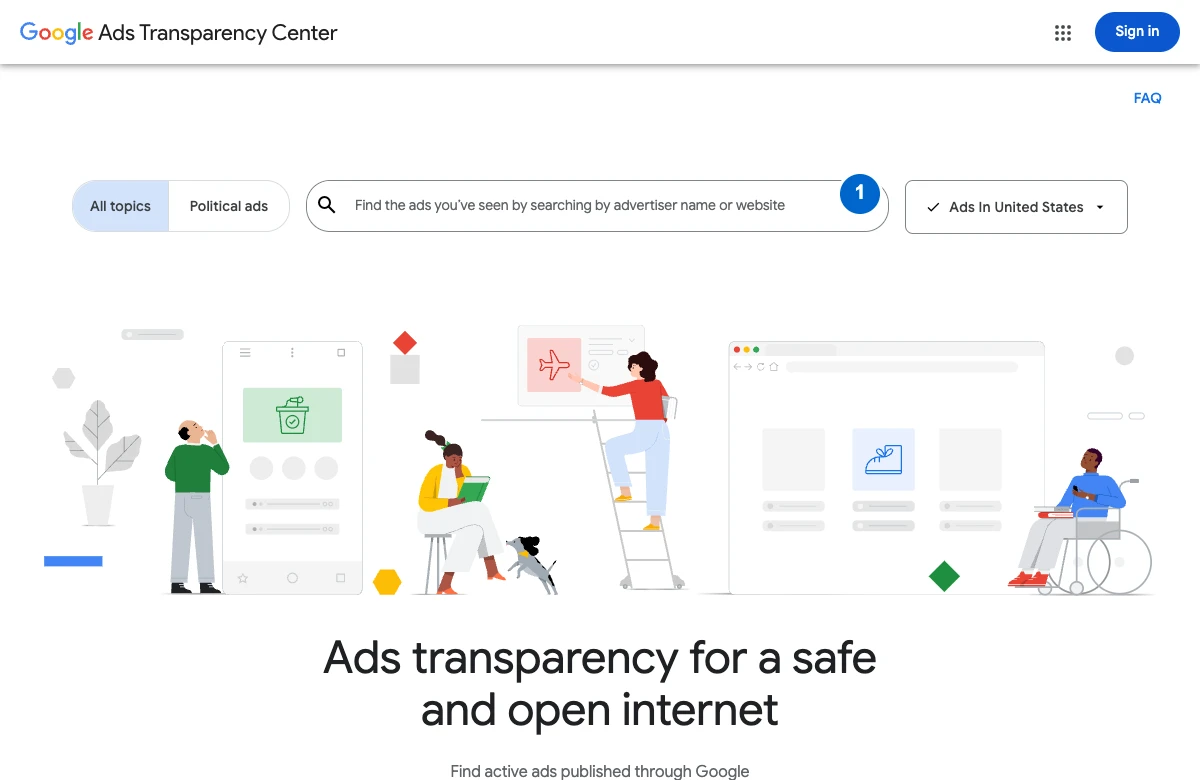
Use the public Ads Transparency Center to inspect a relevant advertiser’s message and destination. Record the promise, evidence and next action. The existence of an ad does not establish that it is profitable, that it targets your audience or that you should copy it. Use it to formulate questions, not as a performance benchmark.
2. Connect the query to the landing page
Draft a headline and supporting sentence that match the chosen intent. The destination must explain the deliverable, scope, evidence and next step without requiring the visitor to decode your business. Send a specific service query to a relevant service page rather than a generic homepage when that better answers the task.
Open the destination on a phone-sized screen. Check load, readability, form errors and what happens after submission. If users must call, test the approved number and availability through your normal business process; do not create test calls to third parties without authorization. Record what counts as a qualified outcome.
See the actual example
3. Calculate the affordable acquisition range
Estimate first-order net revenue and variable delivery costs. Subtract the contribution you need to retain before setting a planning CAC ceiling. Include attributable sales labor, creative and tools in acquisition cost when comparing actual performance. The funnel model below helps you see how visit-to-lead and close rates affect expected customers.
Do not treat a low cost per lead as success if most leads are irrelevant or do not become customers. A forecast based on assumed close rate is only a scenario. Keep it separate from observed conversion data, and use matured cohorts if sales take time to close.
4. Define keywords and exclusions
Write a small initial set of closely related keyword themes and list obvious irrelevant meanings. Review match behavior in the live platform before launch; quotation marks in a planning document do not configure the account. Build an initial negative-keyword list from genuine mismatches rather than excluding every query that has not converted yet.
After traffic starts, review the search terms available in the account alongside qualification outcomes. A visible search-term report may not expose every query. Record the evidence and reason for an exclusion. Do not optimize only for click-through rate if the clicks fail to reach the right buyer.
Worked example — illustrative or dated as stated
Illustrative model: 1,000 qualified visits at a 5% lead rate produce 50 leads. A 20% lead-to-customer rate produces 10 expected customers. With $600 total acquisition cost, modeled CAC is $60. If each customer contributes $100 before acquisition, $400 remains before fixed costs. If lead quality falls, the assumed 20% close rate may no longer apply.
5. Set budget controls and verify the event
Google describes the daily budget as an average. For most campaigns, daily spending limits can be twice the average daily budget and monthly limits 30.4 times it; campaign types and budget changes can affect behavior. Read the linked current guidance, inspect applicable account controls and assign someone to monitor spend.
Write your own maximum acceptable test exposure, review time and pause responsibility. Test accepted, rejected and repeated submissions before enabling acquisition. A form click is not an accepted lead. Confirm the event reaches the intended measurement destination under the appropriate consent conditions and reconcile it with the received enquiry.
6. Review qualified outcomes before expanding
At the review date, export cost and available query data, then reconcile leads and customers from the same period or cohort. Record spend, accepted enquiries, qualified enquiries, sales and contribution separately. Check for delayed conversions and incomplete attribution. A zero-sale result from a long sales cycle is not automatically evidence that the channel cannot work.
Choose a single next action: fix the destination, refine an intent mismatch, improve follow-up, gather more evidence within a new approved cap, or stop. Keep the original assumptions and actual results together. Increasing spend should follow verified economics and capacity, not a more attractive dashboard screenshot.
TRY YOUR NUMBERS / PLANNING MODEL
Can this funnel support your acquisition cost?
Use one period, one cohort and one currency. Defaults are illustrative assumptions, not your company’s results.
Formula: visits × lead rate × close rate = expected customers. Contribution after acquisition = customers × (net revenue − variable cost) − total acquisition cost. This is not net profit: fixed overhead, tax, financing and cash timing are excluded. Include attributable sales labor, creative and tools in acquisition cost; do not count a cost twice. Fractional customers are expected values, not observed people. Inputs stay in this browser and are not saved.
YOUR IMPLEMENTATION WORKSHEET
Build your working document.
Enter planning notes without customer identities or secret values. Your answers stay in this browser and are not saved. Download the completed brief before leaving.
No information is submitted to a server.
Completion checklist
0 / 8 checkedCheck only what you have verified. Download before leaving; this page does not save your progress.
Sources and scope
Primary-source guidance checked October 27, 2026. Interfaces and policies can change; consult the linked current source. Practice screenshots and modeled examples are labeled and are not client campaign results.